
May 15, 2026
The History of Aya Care and Day Care Services in India
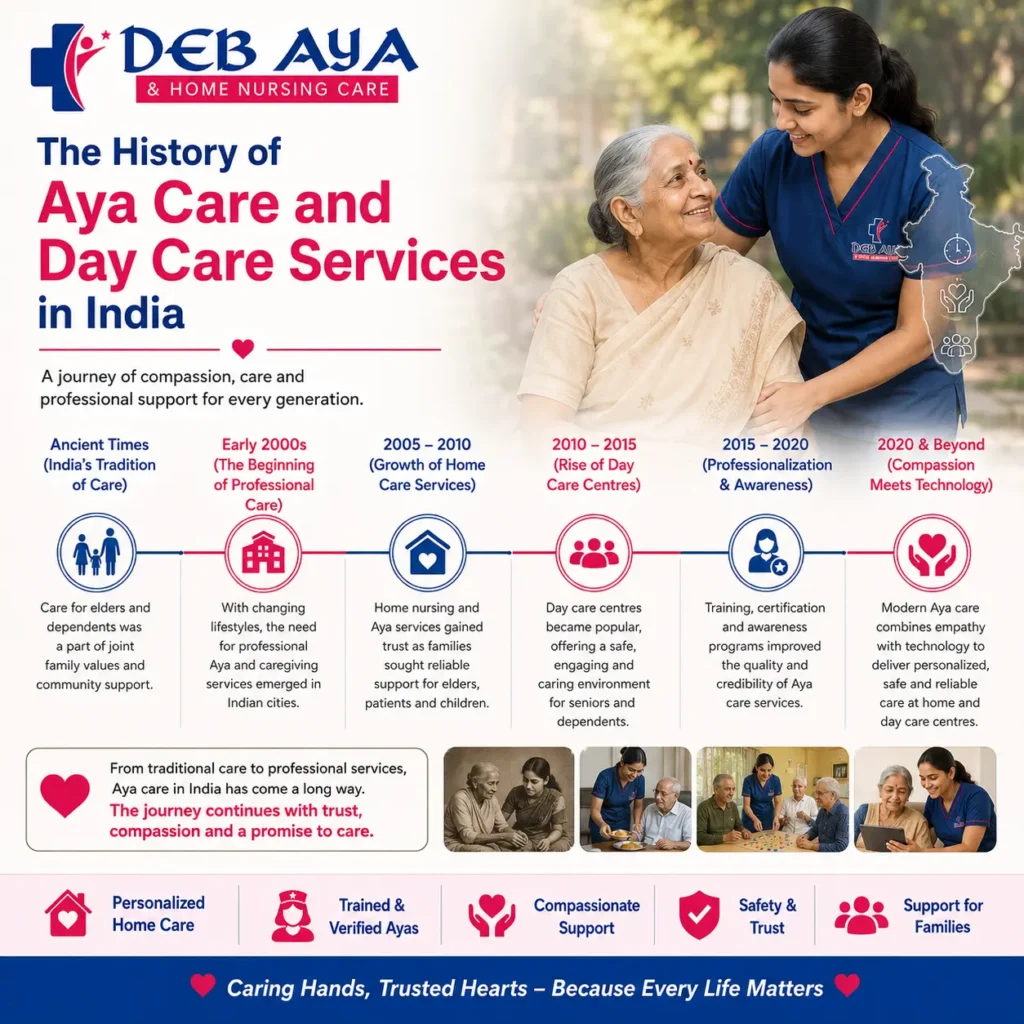
Aya care services in India have a long and culturally rooted history connected to family caregiving, healthcare support, and domestic assistance. The word “aya” itself originated during the colonial period in India and was commonly used to describe female attendants who took care of children, elderly family members, and patients in households. Over time, the role evolved from informal domestic support into a structured caregiving profession that today forms an important part of India’s healthcare and home assistance industry.
Historically, Indian families depended mainly on joint family systems for caregiving. Elderly parents, sick relatives, and children were usually cared for within the household by family members, especially women. However, during the British colonial era, urban households and British families living in India began hiring “ayas” as dedicated caretakers for children and patients. The term later became widely accepted across Indian cities including Kolkata, Mumbai, Chennai, and Delhi.
During the late 19th and early 20th centuries, aya services became more organised in metropolitan regions where urbanisation and professional employment reduced the availability of family caregivers at home. Hospitals and nursing homes also started appointing attendants to support nurses and assist patients with daily activities such as feeding, cleaning, mobility, and personal hygiene.
After India’s independence, healthcare infrastructure slowly expanded across the country. Government hospitals, private nursing homes, and maternity centres increased in number, creating demand for trained attendants and patient support workers. However, aya care still remained largely informal for several decades, operating mainly through local referrals and neighbourhood agencies.
The major transformation began after the 1990s with rapid urbanisation, nuclear family growth, and increased migration for jobs. According to India’s Census and National Family Health data, urban households grew significantly during this period, while the elderly population also increased steadily. These social changes created a strong need for professional home caregiving services.
As more women joined the workforce, families started depending on aya centres for childcare, newborn care, elderly assistance, and patient recovery support. Cities like Kolkata became major hubs for aya service agencies because of the high demand for trained caregivers. Eventually, the concept spread across smaller cities and states throughout India.
Day care services also developed alongside aya care. Initially focused mainly on child care for working parents, day care centres later expanded into elderly day care and rehabilitation support services. Senior citizen day care facilities started emerging in urban India to provide social interaction, healthcare monitoring, meals, and recreational activities for elderly individuals during working hours.
Today, India’s home healthcare industry has become one of the fastest-growing sectors in the country. Reports from healthcare industry studies suggest that India’s home healthcare market is witnessing strong annual growth due to rising chronic illnesses, ageing population, and increasing preference for home-based treatment. The COVID-19 pandemic further accelerated the demand for trained caregivers, home nursing attendants, and patient care assistants across India.
Modern aya services are now far more professional than before. Many agencies provide trained attendants with experience in elderly care, dementia support, post-operative care, physiotherapy assistance, newborn care, and palliative care. Background verification, caregiver training, and emergency support systems have also become important parts of the industry.
From its origins as a domestic caregiving role during colonial India to becoming a professional healthcare support service today, aya care has evolved significantly over the years. In modern India, aya and day care services are not just convenience-based support systems; they have become essential for managing healthcare, elderly care, and family wellbeing in rapidly changing urban lifestyles.